Timeless Giants: The Grandest Forts of Rajasthan You Must Explore

Rajasthan — the Land of Kings — is more than just a state on the map of India. It is a land where stories are not told — they are carved in stone, sung by minstrels, and echoed in the silence of majestic ruins. And nowhere does this spirit breathe more deeply than in its forts — timeless giants rising from deserts and hills, still cloaked in the glory of bygone empires.
These aren’t just military bastions. They are royal dreams solidified in sandstone. From the whispering walls of Amber to the shadowed grandeur of Chittorgarh, here are the greatest forts in Rajasthan — each a crown jewel in India’s regal heritage.

Photo: Kartik Audichya
1. Amber Fort, Jaipur
“A palace where the desert met diamonds and dreams.”
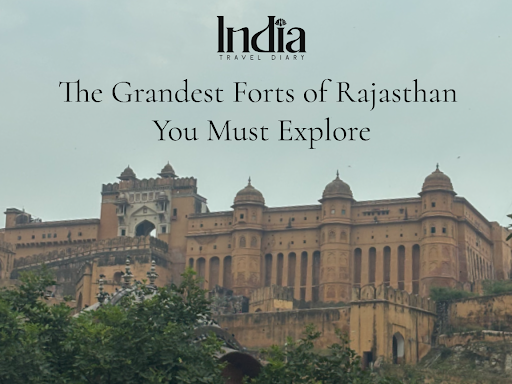
Just outside Jaipur, nestled in the rugged Aravalli hills, Amber Fort rises with elegance and strength. Once the stronghold of the Kachhwaha rulers, its golden sandstone walls glow like embers under the morning sun.
Inside, it’s a maze of marble halls, mirror mosaics, and frescoed ceilings. The Sheesh Mahal — where even a single candle could light up a thousand reflections — feels like walking into a starlit sky. From royal chambers to elephant-lined courtyards, every stone here tells a story of art, ambition, and absolute power.

Photo: Dushyant Rathore
2. Kumbhalgarh Fort, Rajsamand
“The great wall of India, and a birthplace of bravery.”
Kumbhalgarh is not just a fort — it’s a fortress of pride. Encircled by walls that stretch over 36 kilometers, this UNESCO World Heritage site is the second-longest continuous wall in the world, second only to the Great Wall of China.
Maharana Pratap, Rajasthan’s most revered warrior-king, was born here. The fort, with its seven massive gates, temples, and hidden passageways, was never conquered in battle. Standing atop its ramparts, as clouds brush the Aravallis and history whispers in the wind, you feel what it meant to be unbreakable.

Photo: Deepsikha Bhattacharya
3. Chittorgarh Fort, Chittorgarh
“Where honour stood taller than life itself.”
The citadel of Chittor is where Rajasthan’s soul burns brightest. Spread across 700 acres, it is India’s largest fort — and arguably its most tragic. Here, Queen Padmini and later Queen Karnavati led jauhar — acts of collective self-immolation — choosing death over dishonour.
The Vijay Stambh (Victory Tower), Rani Padmini’s Palace, and the Gaumukh Reservoir still carry the weight of sacrifice and valor. Chittorgarh doesn’t just take you back in time — it holds you there, makes you pause, and reminds you of what courage once looked like.

Photo: Nitesh Anand Jagani
4. Jaisalmer Fort, Jaisalmer
“A golden crown rising from the sands of time.”
Unlike any other fort, Jaisalmer Fort is still alive. Built in 1156 AD by Rawal Jaisal, this golden sandstone marvel rises like a mirage from the Thar Desert. And it glows — literally — under the sun, earning it the name Sonar Quila (Golden Fort).
Inside its massive walls, life thrives. Shops, homes, temples, and cafes coexist with ancient carvings and warrior tales. As camels cross the desert beyond and the sun sets in a blaze of amber, Jaisalmer Fort feels less like a monument and more like a living legend.

Photo: Chinmay Mukhi
5. Taragarh Fort, Bundi
“The silent guardian of a forgotten kingdom.”
Far from the touristy trails lies Taragarh Fort — raw, wild, and hauntingly beautiful. Built in the 14th century above the blue town of Bundi, it is one of India’s oldest hill forts. Time may have worn its stones, but not its spirit.
The view from the fort is staggering — layers of blue houses below, forests around, and history buried in its moss-covered gates. Its massive reservoirs, cannon points, and tunnels add mystery, while the palace murals whisper of love, music, and art that once thrived here. Taragarh is Rajasthan’s forgotten gem — grand, quiet, and endlessly fascinating.

Photo: Kairav Engineer
6. Ranthambore Fort, Sawai Madhopur
“Where the roars of tigers meet the echoes of kings.”
Nestled deep within Ranthambore National Park, this 10th-century fort stands as a royal relic amid wild nature. Tigers now roam where armies once marched. Banyan trees clutch its broken pillars, and eagles soar above the once-majestic gates.
Ranthambore Fort is a spiritual experience. Climb to the top, pass ancient temples, and look down upon forests that feel unchanged by time. Here, history and wilderness merge — not in conflict, but in harmony.

Photo: Pram Soni
7. Junagarh Fort, Bikaner
“Unconquered. Uncompromising. Unforgettable.”
Most forts are on hills. Junagarh is in the heart of the desert — and yet, no invader ever took it. Built by Raja Rai Singh in the 16th century, it’s a jewel of Rajput architecture, with over 30 palaces, pavilions, and courtyards inside.
Step into Anup Mahal or Phool Mahal and you’ll be dazzled by gold-leaf ceilings, lattice windows, and dazzling wall art. The fort’s museum preserves the pride of Bikaner’s royal lineage, from war trophies to vintage aircraft.
Rajasthan’s forts are not just relics — they are reminders. Reminders of what it meant to build with beauty and defend with dignity. Each one invites you not just to visit, but to feel — the dust of battles, the poetry in the walls, the silence that once followed a warrior’s last breath.
So, pack your bags. Not just with clothes, but with curiosity, awe, and reverence. Because when you walk into a Rajasthani fort, you don’t just explore — you remember.
BY MANSI POKHARNA